Practical ways we work on durability, waste and long-term performance across our projects.
0124 September 2026
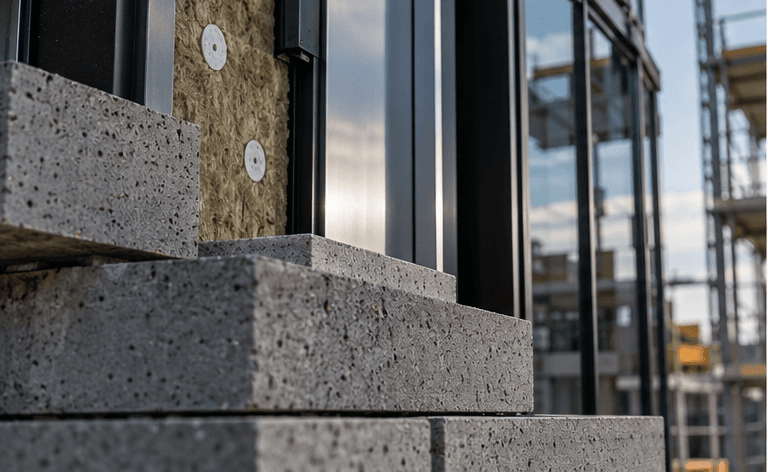
Material choices and long-term performance
The most responsible material is often the one that lasts, performs as intended and can be maintained.
Material decisions are usually made on cost and appearance. Durability, maintenance and what happens at the end of a building's life deserve the same attention, because they shape the building's impact for decades.
We compare options early, while alternatives are still realistic, and involve site teams so that choices are also buildable and easy to protect during construction.
Key points
Compare alternatives while they are still realistic.
Weigh durability and maintenance alongside cost.
Check that choices can be installed and protected on site.
0212 August 2026
Reducing waste through planning
Most construction waste is decided long before the skip arrives.
Waste on site often comes from ordering too much, cutting materials to size, damage during storage and rework. Each of those has its cause in planning.
Prefabrication, standard dimensions, just-in-time deliveries and coordinated designs all reduce what ends up in the container. What remains is separated on site so it can be recycled or reused where possible.
Key points
Order to measured quantities and standard sizes.
Prefabricate where it reduces cutting on site.
Separate remaining waste on site for recycling.
031 July 2026
Designing buildings for adaptability
A building that can change use does not need to be replaced when needs change.
Offices become homes, warehouses become workplaces, and family needs change over the years. Buildings that can adapt to that stay useful for longer.
Adaptability is mostly a matter of early choices: generous floor heights, open structural grids, accessible installation routes and connections that can be taken apart rather than demolished.
Key points
Allow generous floor heights.
Use open structural grids.
Make connections that can be taken apart.
0427 May 2026
Lifecycle thinking before handover
How a building is handed over shapes how well it is used and maintained afterwards.
A building's performance depends on how it is operated. Installations that are poorly understood are often run inefficiently, and maintenance that is not planned tends to be postponed.
Before handover we test installations, explain how they work and provide clear maintenance information, so owners and users can keep the building performing as it was designed to.
Key points
Test installations before handover.
Explain systems to the people who will run them.
Provide clear maintenance information.
Through the project
Where sustainability decisions are made.
01
Design
Floor heights, structural grids and material choices set a building's adaptability and durability.
02
Procurement
Material reviews compare alternatives on durability, availability and end-of-life options.
03
Construction
Logistics, prefabrication and waste separation reduce what is wasted on site.
04
Handover
Commissioning and clear maintenance information help a building perform as designed.