Insights

Innovation

The digital tools and working methods we use to coordinate projects and make information easier to use on site.

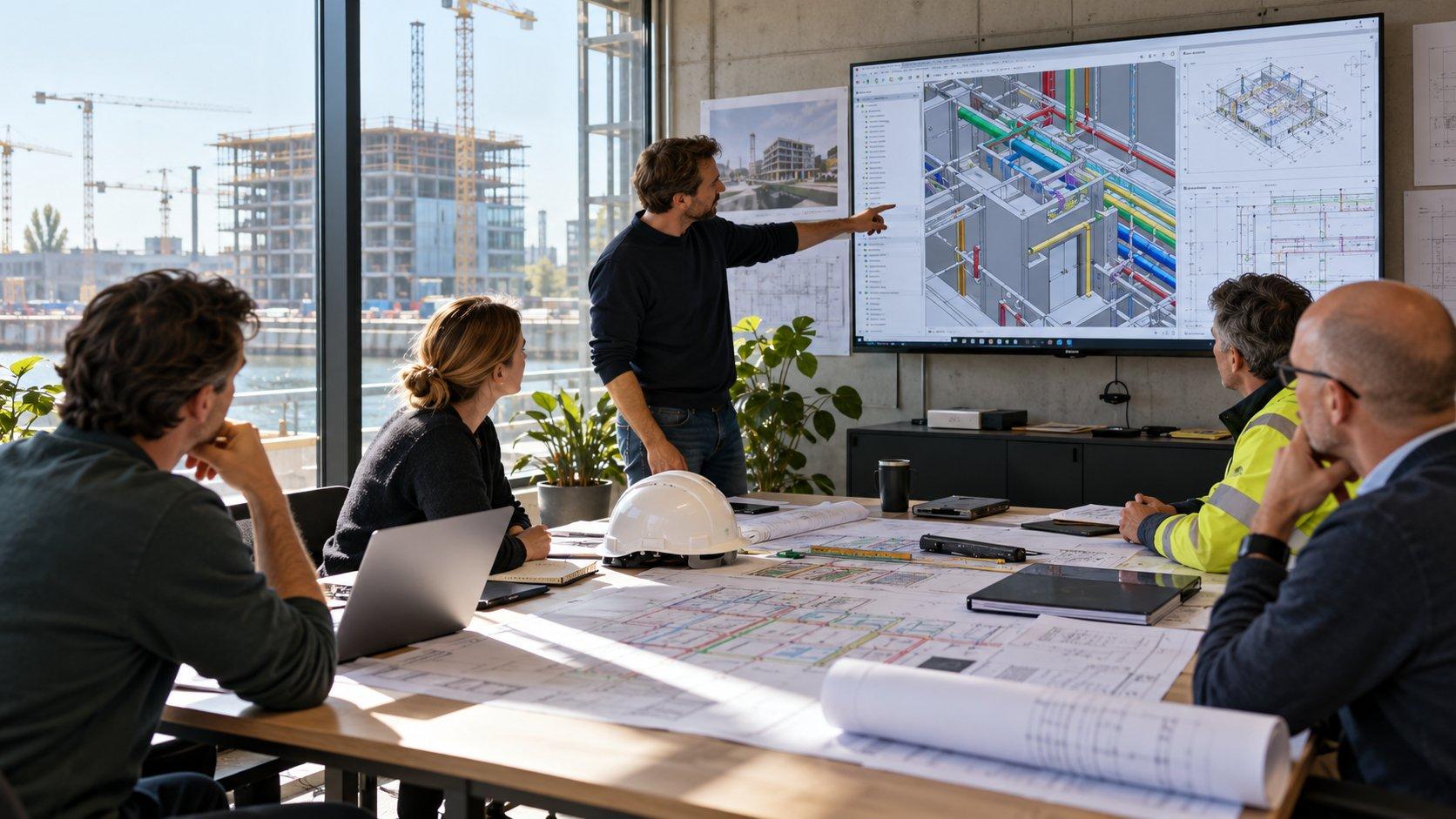
A coordination meeting around a large screen showing a 3D model of building services.

Innovation17 September 2026

Using digital coordination to solve problems earlier

How a shared model and a weekly clash routine move problem-solving from the scaffold to the meeting room.

On most VELDIN projects, architectural, structural and installation designs are combined in one coordinated BIM model. The model is the shared reference for the whole team, from design meetings to the site office.

Clash detection runs on a fixed weekly rhythm while the design develops. Results are not a long list of warnings: they are grouped, prioritised and discussed in a short coordination session where each issue gets an owner and a deadline.

Model-based planning links the model to the construction sequence, so the team can check whether elements can be built, lifted and installed in the order planned. It also makes it easier to explain the sequence to subcontractors before they start.

The aim is not technology for its own sake. Digital coordination is useful when it leads to fewer open questions on site, fewer changes during construction and drawings that site teams can trust.

Technology on our projects

On a project

Which tools we use, and when.

  1. 01

    Design

    Disciplines are combined in one model, and clash detection starts as soon as there is enough detail.

  2. 02

    Pre-construction

    Model-based planning tests the construction sequence, logistics and crane positions.

  3. 03

    Construction

    Site teams work from current drawings on tablets and record inspections digitally.

  4. 04

    Handover

    Inspection records, as-built information and documentation are collected for the owner.

Innovation5 August 2026

Making project information easier to access on site

The right drawing, in the right version, in the hands of the person doing the work.

Site teams make dozens of decisions a day based on drawings, specifications and agreements. When the information they hold is out of date, mistakes follow, however skilled the people involved.

Our sites use tablets with access to the current drawing set, inspection checklists and the latest decisions from coordination meetings. Document control makes sure superseded drawings are withdrawn, so there is only one version in circulation.

Inspections and snagging are recorded on site with photos and locations. That information goes straight back into progress reports and quality records, instead of being retyped later.

What we look for in a new tool